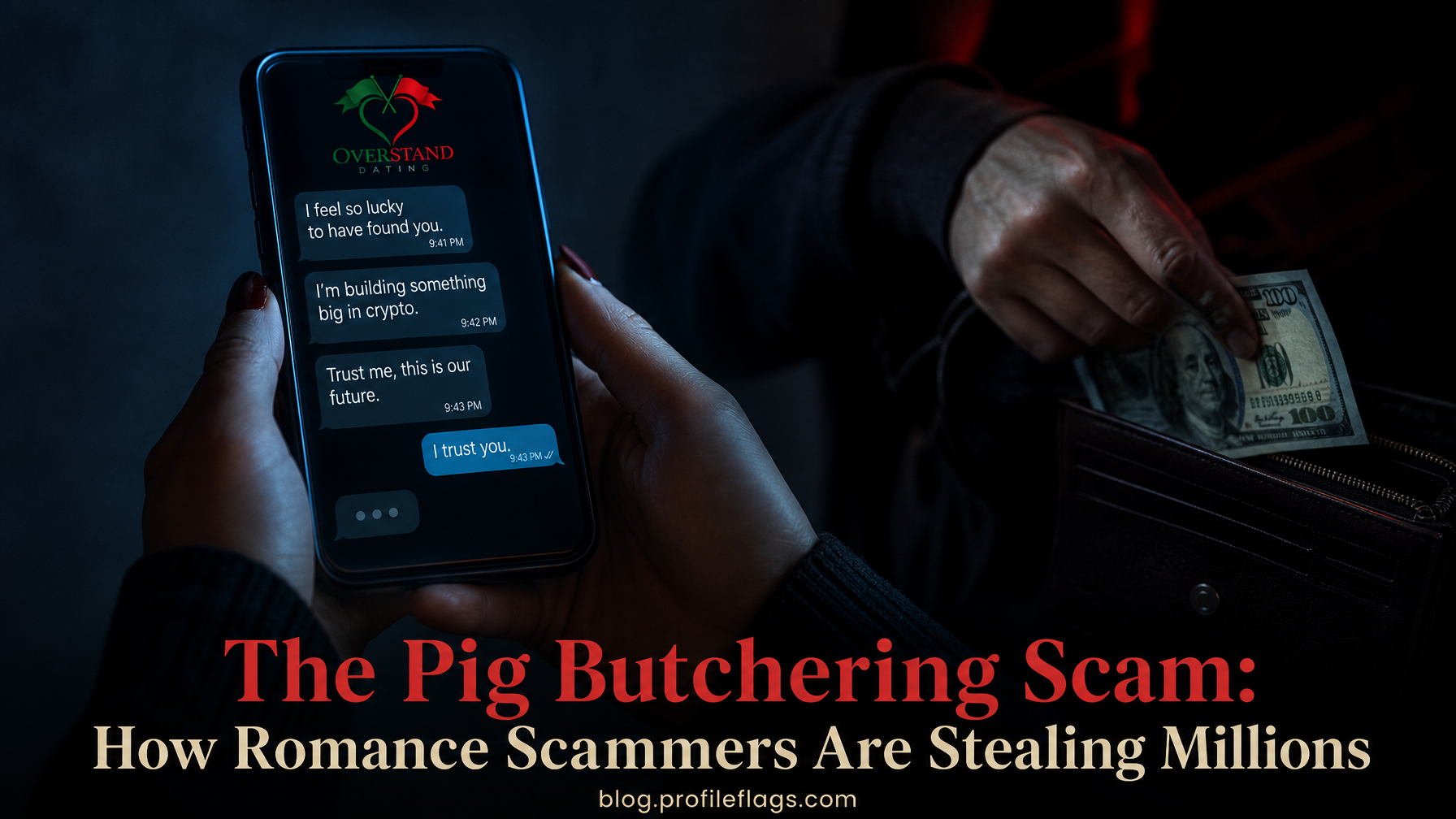
The Pig Butchering Scam: How Romance Scammers Are Stealing Millions on Dating Apps
Pig butchering scams have stolen over $75 billion globally. They start on dating apps with a friendly message and end with your savings gone. Here's exactly how it works and how to spot it.
TLDR
A pig butchering scam is a long-term romance and investment fraud. Scammers build fake relationships over weeks or months on dating apps, then introduce fraudulent crypto investment platforms. Victims watch fake profits grow, invest more, and eventually find they can't withdraw anything. The money is gone. The "person" never existed. According to Kerberus, these scams have stolen an estimated $75 billion globally and are growing 40% year over year.
What Is a Pig Butchering Scam?
The name comes from a Chinese phrase: sha zhu pan (杀猪盘), which translates literally to "killing pig plate." The metaphor is intentional and ugly — the scammer fattens a pig before slaughter. In this case, you are the pig. The fattening is weeks of warm conversation, emotional connection, and carefully managed trust. The slaughter is when your money disappears.
Law enforcement agencies including the FBI and the Commodity Futures Trading Commission (CFTC) have increasingly referred to these scams as "romance baiting." They operate at industrial scale. The people running them are not lone individuals — they're organized criminal networks, often based in Southeast Asia, that operate with scripts, playbooks, and quotas. Some of the people executing the scams are themselves trafficking victims, forced to work in scam compounds.
The CFTC estimates that romance baiting costs Americans approximately $10 billion per year. Globally, Kerberus puts the total at over $75 billion. These numbers are likely undercounts — many victims never report out of shame.
How It Works: The Stages of a Pig Butchering Scam
Stage 1: The First Contact
The scam usually starts one of three ways. A match on a dating app. A message on social media from an attractive stranger. Or the most recognizable opener: a text that says "Hey, is this Sarah?" or "Hi, didn't we meet at [event]?" — the classic wrong number that turns into a conversation.
That first message is designed to feel harmless. It's an easy mistake to make. You correct them, they apologize, they seem normal and friendly. The conversation continues because why not? They seem nice.
According to the CFTC, scammers often move victims off dating platforms quickly — onto WhatsApp, WeChat, or Telegram — where they have more control and less oversight. If someone pushes to move off a dating app very early in a conversation, that's something to notice.
Stage 2: The Trust Building (The "Fattening")
This phase can last anywhere from two weeks to several months. The scammer is patient. That patience is part of the design. They're building something that needs to feel real before the next phase can work.
During this period they will message consistently — often every day. They'll ask about your life, remember details, check in when you mention something stressful. They present as thoughtful, attentive, and emotionally available in ways that can feel genuinely rare. They often claim to be successful: a doctor working overseas, a businessperson in Singapore, a financial professional in Hong Kong. The lifestyle they show is polished and aspirational.
Researchers at UC Davis who interviewed 26 pig butchering victims found consistent patterns in this phase: staged emotional intimacy, manufactured vulnerability (the scammer shares personal "struggles" to create closeness), and deliberate mirroring of the victim's values and interests. By the time the investment topic comes up, many victims have already begun to feel a genuine connection.
Stage 3: The Introduction of the Investment
It rarely comes as a hard pitch. More often it surfaces naturally — or what feels natural. They mention they recently made some money trading crypto. They say a cousin showed them a platform. They're not trying to sell you anything; they just mention it offhandedly while discussing their week.
If you express interest, they're happy to show you. They walk you through the platform. It looks legitimate. It has charts, account dashboards, customer support. They invest a small amount themselves and you watch it grow. They encourage you to try with a small amount too. You do. Your balance goes up. Everything looks real because everything is designed to look real.
Stage 4: The Escalation
The fake platform shows consistent returns. The scammer encourages you to put in more. They might invest more themselves — supposedly — to show confidence. Your balance keeps climbing. The numbers on the screen are fabricated, but they're compelling. People have moved retirement savings, sold property, and borrowed from family at this stage. The platform is built to be convincing and the emotional relationship adds another layer of trust that makes skepticism feel disloyal.
Stage 5: The Slaughter
At some point you try to withdraw. Maybe you need the money. Maybe you just want to test that it's real. The withdrawal is blocked. A message says you owe a "tax" or "fee" before funds can be released. You pay it. Another fee appears. Or the platform goes dark entirely. The person you've been talking to — the one who knew your sister's name and remembered your dog's birthday — stops responding. The account disappears. The platform disappears. The money is gone.
There is no investment. There never was. The platform was built to show fake numbers. The relationship was built to bypass your judgment. The whole architecture existed to get you to a point where you would transfer money that could not be recovered.
Red Flags to Watch For
They Contact You Out of Nowhere
A wrong number text, a random follow, an unprompted message from someone you've never interacted with. Real romantic connections on dating apps begin because two people showed mutual interest. Unsolicited contact from strangers — especially attractive ones with polished profiles — is the most common entry point for this scam.
The Profile Looks Too Perfect
Stock photo-quality images. A career that explains why they can't meet in person (offshore oil rig, military deployment, international business). A life that reads like an aspirational character sketch rather than a real person's actual history. Run any profile photos through a reverse image search. Scammers often use stolen images from models or public figures.
ProfileFlags can analyze dating profiles for patterns that suggest a fake or misleading identity. If something feels off about a profile, run it before you invest any more time in the conversation.
They Push to Move Off the Dating App Fast
Dating platforms have fraud detection. Messaging apps don't. Moving you to WhatsApp or Telegram early removes oversight and makes the conversation harder to report or trace. If someone is pushing to continue talking off-platform within the first few exchanges, that's a flag worth pausing on.
They Can Never Meet In Person
There's always a reason. Overseas work. A sick family member. A delayed flight. The excuses are plausible individually. Together, over weeks or months, they add up to a pattern. Anyone who has been talking to you daily for two months and still can't arrange a video call or an in-person meeting is hiding something. The most likely explanation: they don't exist as presented.
Investment Comes Up Casually
Real friends don't typically introduce you to investment platforms three weeks into knowing you. When someone you met online starts talking about trading, crypto, or financial opportunities — especially ones they frame as exclusive or insider — that's not a coincidence. It's a transition into the next phase of the script.
The Platform Isn't Verifiable
Before putting any money into any platform someone online introduced you to, check it independently. Search the name plus "scam" and "review." Look for regulatory registration with the SEC or CFTC. Legitimate investment platforms are registered. Most pig butchering platforms are not, because they're not real. If you can't find independent verification that the platform exists outside of what this person has shown you, don't touch it.
Withdrawals Require Fees
This is the tell. Any platform that requires you to pay a fee, tax, or processing charge before releasing your funds is running a scam. Legitimate investment platforms deduct fees from returns — they do not require additional deposits to release existing balances. The fee request is a final extraction attempt before the disappearance.
Why Smart People Fall for This
The question people ask most often about pig butchering victims is some version of "how could they not know?" The honest answer is that the scam is engineered specifically to defeat the defenses smart people have.
The emotional relationship comes first. By the time money enters the conversation, the victim has already developed real feelings for someone they believe is real. Suspicion at that point doesn't feel like caution — it feels like a betrayal of the connection. The scammer has spent weeks building exactly that dynamic, and they're good at it. This isn't a casual operation. These are professionals using tested scripts on hundreds of people simultaneously.
The UC Davis research found that victims consistently described the relationship as feeling genuinely intimate. Many said they still found it hard to believe, even after the money was gone, that the connection had been entirely fabricated. That's how well it works.
What to Do If You Think You're Being Scammed
Stop transferring money immediately. Do not pay any fee, tax, or charge to "unlock" withdrawals. That money will also disappear.
Report it. In the United States, you can file reports with the FBI's Internet Crime Complaint Center (IC3) at ic3.gov, the FTC at reportfraud.ftc.gov, and the CFTC at cftc.gov/complaint. Reporting won't always recover the money, but it contributes to investigations that have led to real arrests and shutdowns of scam infrastructure.
Talk to someone. The shame around these scams is part of what makes them effective — it keeps victims silent and isolated. These scams target normal, intelligent people. If it happened to you, you were not stupid. You were targeted by professionals with a documented playbook.
How to Protect Yourself Going Forward
Trust takes time to build for a reason. Anyone who builds it very fast — daily contact, deep emotional intimacy within weeks, a connection that feels unusually strong unusually quickly — is worth slowing down with. Real relationships don't need to rush. Scams do.
Video call early. Not once, on their schedule, with a frozen screen. Multiple times, unscheduled, where you can see them react in real time. A scammer operating a fake identity cannot sustain a real-time video relationship for long.
Keep investment conversations out of romantic ones. Mixing financial opportunity into a developing romantic connection is not how real relationships work. It's how this scam works. Those two conversations belong in completely different rooms.
And before you invest time in someone you met on a dating app, run their profile. ProfileFlags scans dating profiles for the patterns that signal deception, inauthenticity, and mismatched intentions — the things that are hard to see when you're also feeling a connection. It's fast, it's one payment for unlimited scans, and it's at profileflags.com.
The Bottom Line
Pig butchering scams are not random. They are precision operations designed to target the exact parts of human psychology that make connection feel real. The warmth you feel is real. The financial platform is not. Neither is the person who introduced you to it.
The best protection is knowing how the script works. Once you've read it, the steps become recognizable. And recognizing them early — before the emotional investment deepens and the financial one begins — is the difference between a conversation you end and a loss you're still dealing with years later.