Shrekking: Why Dating Down Won't Protect You From Being Played
Shrekking — dating someone outside your usual type hoping they'll treat you better — is going viral. But red flags aren't an attractiveness problem. They're a character problem. And character doesn't care what someone looks like.

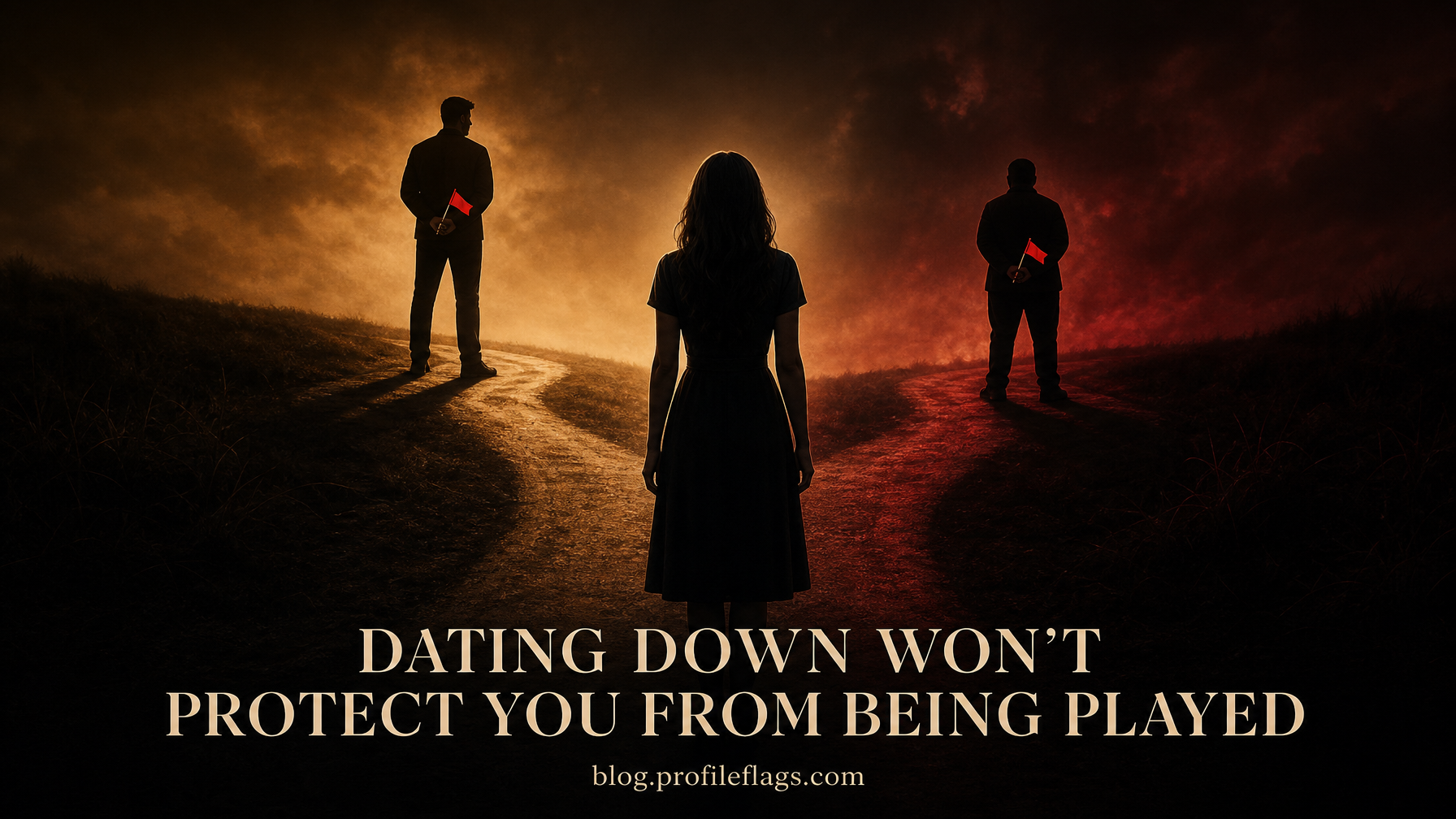
There's a dating trend going around called Shrekking — and if you've been on the internet this year, you've probably seen it. The idea: stop chasing conventionally attractive, high-status men and date someone outside your usual type instead. Someone less polished, less magnetic, less likely to have options. The logic being that a man who doesn't know he's a catch will treat you better than one who does.
On paper it makes sense. In practice, women who tried it have been calling it one of the most disorienting experiences of their dating lives.
Because here's what Shrekking doesn't account for: red flags are not an attractiveness problem. They're a character problem. And character doesn't care what someone looks like.
What Shrekking Actually Is
The term comes from the Shrek movie logic — the ogre who turns out to be the better man. "Getting Shrekked" is deliberately choosing to date someone who doesn't hit your usual physical or social type, betting that the lack of conventional appeal means they'll be more grateful, more loyal, more emotionally available.
It's dating down with a rebrand. And the rebrand has real emotional weight behind it — because the women doing this aren't settling out of laziness. They're exhausted. They've been love bombed by attractive men, future faked by successful ones, breadcrumbed by the ones who had options. The logic of "maybe someone with fewer options will actually show up" isn't irrational. It comes from real, repeated disappointment.
The problem is the conclusion. Trading appearance for character assumes appearance and character are connected. They're not.
The Logic That Makes Sense — Until It Doesn't
The Shrekking theory works if bad behavior is a function of having too many options. And sometimes it is. Men who know they're attractive and in demand can afford to be inconsistent — because the cost of losing you is low when replacements are easy to find.
But manipulation, emotional unavailability, love bombing, financial red flags, and control patterns are not exclusive to men who have options. They exist across the full spectrum of looks, income, and social status. A man who has never been told he's exceptional can still be jealous, controlling, and dishonest. A man who doesn't get a lot of attention can still love bomb to secure attachment and then withdraw once he has it. A man who doesn't look like a catch can still be running the same patterns — he's just less practiced at it.
What actually changed when you Shrekked: the packaging. What didn't change: the need to read the flags.
The Red Flags That Don't Care About Your Type
These patterns show up regardless of where someone falls on whatever scale you're using to define "your type."
The gratitude trap
One of the core hopes behind Shrekking is that a man who feels lucky to have you will treat you better. Sometimes true. But "lucky to have you" can also produce its own set of red flags — insecurity that becomes possessiveness, gratitude that becomes expectation, the sense that because he showed up consistently for three months, you owe him something. Gratitude is not character. It's a feeling. It changes.
Love bombing without the looks
Love bombing gets associated with charming, conventionally attractive men because they get the most attention when they do it. But the behavior — overwhelming affection and attention early on to accelerate attachment — is not a strategy that requires good looks. It requires knowing that intensity works. Men who don't have physical attraction as a hook often lean harder on intensity as a substitute. The dynamic is the same. The packaging is different.
Insecurity that becomes control
A man who doesn't believe he deserves you and knows it can develop a specific kind of possessiveness — not from confidence, but from fear. He monitors. He gets uncomfortable when you succeed. He makes small comments about the way you dress or who you spend time with. The insecurity that you thought would make him safer becomes the exact thing that makes him unpredictable. This is a flag that Shrekking can actually intensify rather than avoid.
The "nice guy" performance
Men who are marketed — by themselves or by dating culture — as the less flashy, more dependable option sometimes come with their own set of expectations attached to that identity. "I'm not like those other guys" is a sentence worth scrutinizing carefully. Men who lead with their own niceness as a credential are sometimes genuinely kind. They're also sometimes building a debt structure — they're nice now so that later you owe them something, whether that's loyalty, compromise, or not leaving when the behavior changes.
The same patterns, less practiced
The most disorienting version of getting Shrekked is what women describe on Reddit and in comment sections everywhere: being genuinely hurt by a man they weren't even attracted to in the first place. Women who went in with low romantic stakes and came out legitimately traumatized because the behavior — the gaslighting, the inconsistency, the slow erosion of their standards — was exactly what they'd experienced with men they were attracted to. Just without the chemistry to explain away.
The flags were the same. They just landed differently because there was no attraction buffer.
What Shrekking Gets Right
The instinct behind Shrekking isn't wrong — it's just aimed at the wrong variable.
Expanding your type is genuinely good dating advice. Physical attraction matters, but leading exclusively with it means you miss people who would actually be right for you. Being flexible about appearance, height, job title, and social status opens up a larger and often better pool of potential partners.
The error is assuming that flexibility about type is the same as protection from red flags. It isn't. What actually protects you from red flags is knowing what they look like, regardless of who's displaying them.
Shrekking changes who you're evaluating. It doesn't change your ability to evaluate them.
The Real Variable That Matters
The women who consistently avoid getting played — by attractive men, by unattractive men, by men who have options and men who don't — have one thing in common. They know their flags. They know what early behavior patterns are worth paying attention to. They know the difference between someone who is nervous on a first date and someone who is performing. They know what love bombing looks and feels like before attachment sets in. They have a framework for what they're looking at that doesn't depend on who they're attracted to.
That framework is what Shrekking can't give you. Changing your type can't give it to you either. It comes from knowing the patterns — and knowing them specifically enough to recognize them before you're too invested to act on what you're seeing.
Your type was never the problem. Your flag library is what needs updating.
Build Your Flag Library
Before your next date — whether he's your usual type or not — run his profile through the ProfileFlags scanner. It reads the behavioral signals in a dating profile before you've invested a single conversation.
And for the full breakdown of the patterns that show up regardless of type, 100 Real-Life Red Flags covers 100 specific flags risk-scored from low to high, with response scripts for when you're not sure what to do once you've spotted one. $12.99 on Gumroad.
Dating down won't protect you. Dating smarter will.