Chatfishing: When AI Writes Your Dating Messages
The texts were amazing. The person wasn't. Chatfishing is the new trend of using AI to write flirtatious dating messages — here's how to spot the gap between engineered charm and the real person.

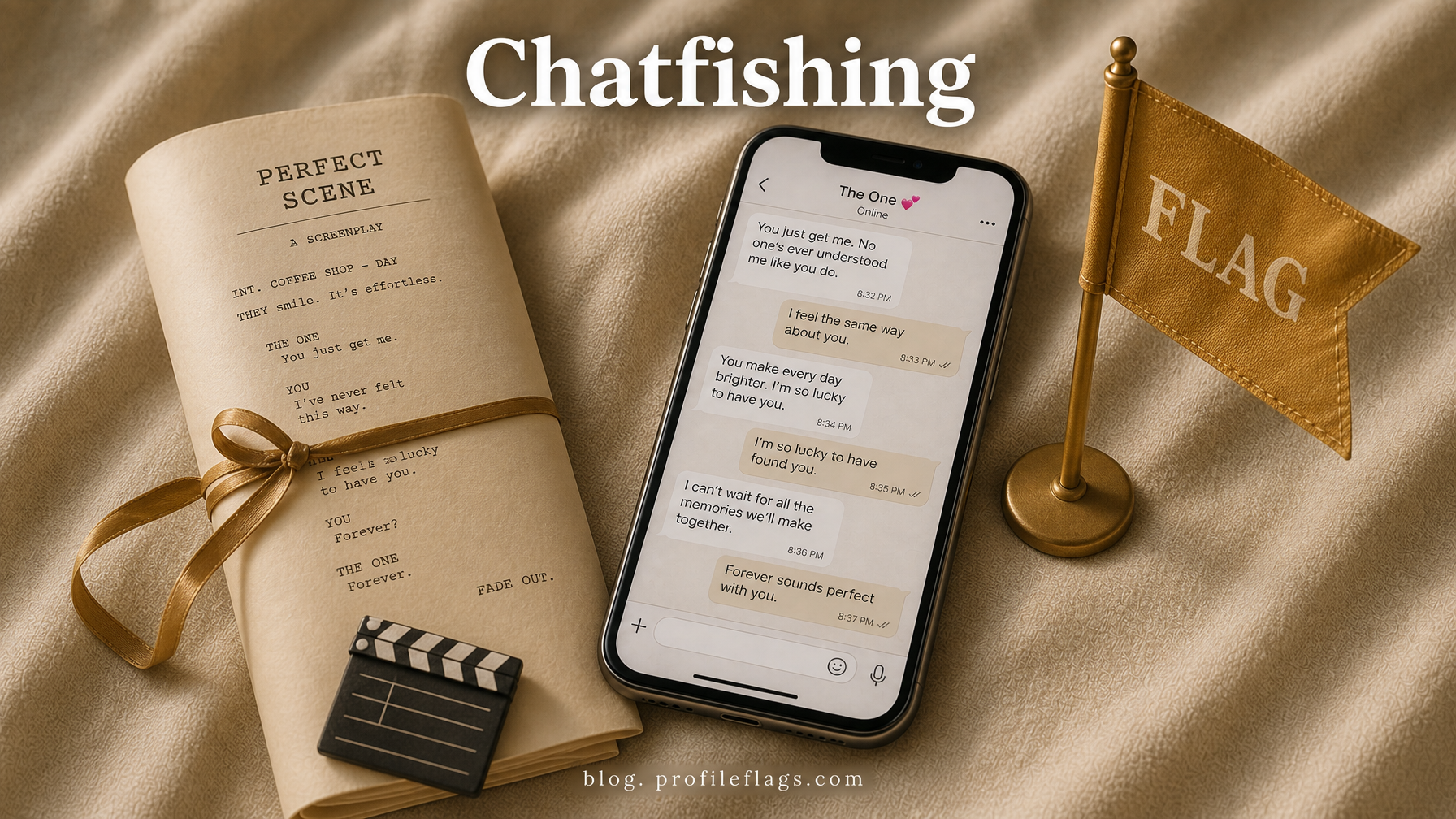
The texts were amazing. The person wasn't.
That gap is the whole story. Chatfishing is the practice of using AI to generate flirtatious, witty, perfectly-timed dating messages that don't actually come from the person sending them. The Guardian reported on it in October 2025, documenting how men were trading prompts in online forums specifically designed to make ChatGPT produce charming, effective opening lines and ongoing conversation. One woman described the moment she realized what had happened as feeling "ChatGPT-ed into bed" — texts that built real anticipation for a person who, in reality, didn't exist the way the messages suggested.
This is a distinct pattern from the AI catfish we covered previously — that post was about fake photos and fabricated identities. Chatfishing is different. The person is usually real. The face is usually real. What isn't real is the personality on the other end of the conversation.
What Chatfishing Actually Is
Chatfishing happens when someone feeds AI a description of their match — her interests, her last few messages, sometimes screenshots of her profile — and asks it to generate a reply designed to charm, hook, or move the conversation toward a date. The tool writes the wit. It writes the callback jokes that make her feel remembered. It writes the perfectly-timed vulnerability that makes her feel like she's getting to know someone real.
The person sending it is real. But the conversation — the thing that's actually building the emotional connection — is manufactured by software optimized for one outcome: getting a response, a match, or a date.
This is worth separating from using AI as a light assist — running a draft message through a grammar check, or asking for help rephrasing something awkward. Chatfishing is the wholesale outsourcing of the conversation itself, often without disclosure, to a tool whose entire function is producing text that performs connection rather than expressing it.
Why It Works So Well (And Why That's the Problem)
AI-generated dating messages are frequently better than what most people would write on their own. That's exactly why chatfishing is effective and also why it does real damage.
The wit is optimized, not organic. A callback joke referencing something she mentioned three messages ago lands as "he was really paying attention." In reality, the AI was fed the conversation history and prompted to generate a personalized reference. The attentiveness reads as care. It's pattern matching.
The pacing is engineered. AI models are good at reading emotional pacing — when to escalate, when to pull back, when to ask a vulnerable question that invites reciprocal vulnerability. That pacing, when done by a person organically, is called chemistry. When engineered by a tool prompted for maximum engagement, it's a manufactured version of the same signals.
It closes the gap between the person's real conversational ability and their in-person presence. This is the part that actually breaks trust when it's discovered. Someone matches with a version of a person that exists only in text — sharp, funny, emotionally fluent — and meets someone who can't produce that same energy without the tool doing the writing. The disappointment isn't just about being deceived. It's about the specific kind of deception: falling for a communication style, not a person.
How to Recognize It
Chatfishing isn't always obvious from a single message, but there are patterns that build up over a conversation.
The messages are unusually polished for a casual dating app conversation. Not just well-written — architecturally well-written. Perfect setup-and-payoff structure in a two-line text. Most people don't write like that off the cuff, especially not consistently across a multi-day conversation.
The response time doesn't match the message quality. A genuinely thoughtful, witty response that arrives within 15 seconds of your message is a signal. Real wit usually comes with either immediate spontaneity (short, less polished) or visible delay (longer, more considered). A fast reply with high polish is a common chatfishing tell.
The tone shifts noticeably between message types. If casual banter and emotionally deeper messages both have the same overly smooth, well-structured quality, that consistency across register is unusual. Real conversation has more texture — some messages land better than others, some are typo'd, some are just okay.
The in-person meeting feels like a completely different person. This is the most reliable tell, and it comes after the fact. If the conversation built someone up as sharp, quick, emotionally articulate — and the in-person version can't produce anything close to that in real time — the gap is the evidence. Genuine chemistry in text usually correlates, at least loosely, with some baseline version of that energy in person. A dramatic mismatch is worth naming, even if it feels awkward to bring up.
Ask a question that requires an immediate, specific, personal answer. AI-generated responses are strong on broad charm and weaker on hyper-specific, time-sensitive personal detail that requires no prep. Something like "what's the last thing that made you laugh out loud today, be specific" tends to expose the gap between a person typing in real time and someone running a message through a tool.
What This Means for Trust
Chatfishing sits in a gray area that's still being figured out publicly. Using AI to fix a typo isn't the same as using it to write your entire personality into existence for a stranger. But the industry hasn't drawn a clean line yet, and neither have most daters.
The practical impact matters more than the ethical debate. If the version of someone you're falling for exists only because a tool is generating it, you are not building a connection with them. You're building a connection with an output. When that gap surfaces — and it usually does, because in-person interaction can't be scripted the same way — the disappointment isn't really about AI. It's about time spent investing in something that wasn't what it presented itself as.
That's the same core mechanic behind every entry in the flag system, whether it's a fabricated persona, a manufactured love-bombing pace, or a chatfished conversation. The presentation and the reality don't match, and the gap is where the damage lives.
What to Do About It
Move to a call or voice note earlier than you might normally. Voice reveals what heavily-edited text can hide — hesitation, real-time thinking, actual personality under less-scripted conditions. It doesn't have to be a big step. A five-minute voice memo exchange surfaces more truth than another week of text.
Ask time-sensitive, hyper-specific questions. Anything that requires an answer rooted in that exact moment is harder to outsource convincingly.
Pay attention to the mismatch, not the message quality. The messages being good isn't the flag. The gap between the messages and the person is. If the conversation was electric and the date feels like meeting someone completely different, trust that observation.
Meet in person sooner rather than later if the conversation feels unusually magnetic. Ironically, the more captivating the texting is, the more valuable an early in-person meeting becomes — it's the fastest way to confirm whether the chemistry is real or manufactured.
The ProfileFlags scanner reads the language patterns in a profile and conversation to help you spot when something reads as engineered rather than organic — before you've invested emotional energy in a version of someone that might not be real.
For more on how AI is reshaping dating app deception more broadly, read our post on the AI catfish phenomenon.
The Bottom Line
Good writing isn't a red flag. Everyone deserves the benefit of a thoughtful message. But there's a difference between someone putting effort into how they communicate and someone outsourcing the entire communication to a tool built to produce charm on demand.
The texts were amazing. If the person isn't, that's the information that matters — not how good the messages were.