Frankensteining in Dating: When You're Building a Partner Instead of Loving One
Frankensteining in dating means someone is trying to reshape you into their ideal partner instead of loving who you are. Here's how to spot it early.

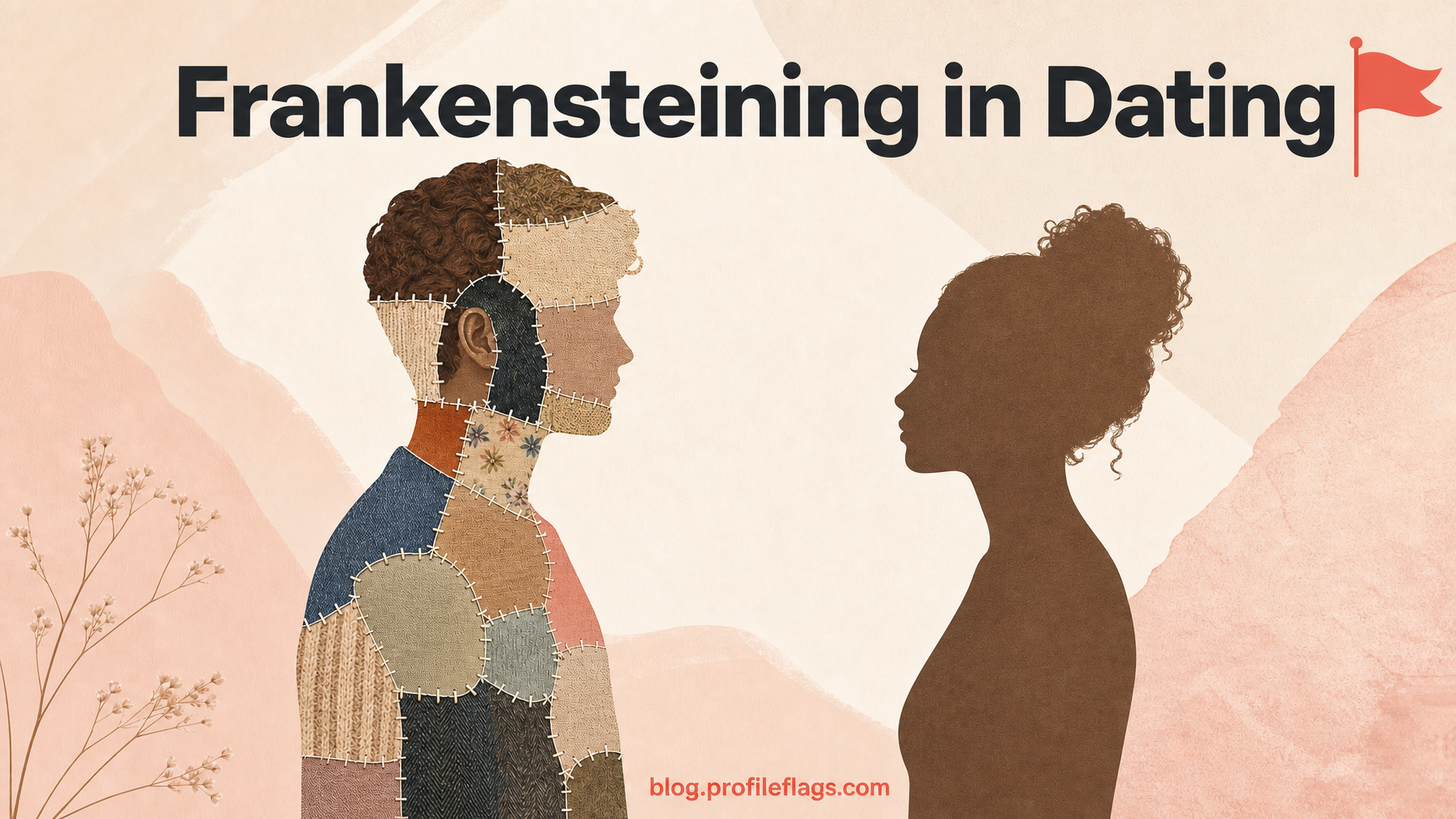
The Coral Flag on this one is simple: frankensteining in dating is when someone tries to reshape you, piece by piece, into their idea of the perfect partner instead of accepting who you actually are.
TLDR: Frankensteining is a term dating experts started using in 2026 to describe someone slowly trying to change your appearance, habits, or personality to match their private idea of an ideal partner. It usually starts small (a haircut suggestion, a new hobby you "should" try) and creeps until you don't recognize yourself. Here's how to spot it before you've been fully rebuilt.
Table of Contents
- What is frankensteining in dating
- Where the term came from
- Six signs you're being frankensteined
- Why people do this (it's not always malicious)
- Frankensteining vs. healthy encouragement
- What to do if it's happening to you
What is frankensteining in dating?
Frankensteining in dating is when your partner tries to change your appearance, interests, habits, or personality to fit what they wish you were, instead of dating who you actually are. Therapist Sara Sloan, LMFT, CST, IRT, described it to Vice as "trying to mold or change your partner's appearance, interests, and habits to better fit what you believe to be your ideal partner." [Vice](https://www.vice.com/en/article/introducing-frankensteining-the-dating-trend-experts-say-can-ruin-a-relationship/)
The name comes from Mary Shelley's novel, where Dr. Frankenstein builds a person from parts instead of accepting one that already exists. Psychiatrist Bruce Y. Lee, writing in Psychology Today, put it this way: the tell is thinking "if only my partner were different in this one way, everything would be so much better." [Psychology Today](https://www.psychologytoday.com/ie/blog/a-funny-bone-to-pick/202606/beware-of-frankensteining-in-a-relationship)
It sits right next to love bombing and negging on the list of behaviors that look like affection at first and control on closer inspection.
Where the term came from
Frankensteining picked up traction on social media in mid-2026, but the pattern is old. Dating apps just made it easier to spot, because the discourse around "types," "glow-ups," and "potential" gives people a script for reshaping someone without ever calling it that. Lee notes it can be fully conscious, a "Project" with a timeline, or completely unconscious, where the person doing it genuinely believes they're just being supportive.
Six signs you're being frankensteined
Sloan gave Vice several concrete markers. Here's the expanded list built from her examples plus common patterns from dating forums:
- The wardrobe overhaul. They buy you clothes that look nothing like anything you'd pick, and frame it as a gift, not a request.
- The hobby draft. You're suddenly expected to join their hobbies, their friend group, their weekend routine, and your own interests quietly get less airtime.
- The appearance comments that repeat. Not one offhand remark, but a pattern: hair, weight, style, teeth, always circling back to the same "if you just."
- The career redirect. They push you toward a job or income path that suits their vision of a life together, not what you've said you want.
- The comparison to your potential. They talk about who you'll be in a few years more than who you are now, and it starts to feel like a pitch deck.
- The resistance to your no. When you say you like your job, your hair, your friends the way they are, the topic doesn't drop. It comes back next month.
The verdict: one of these on its own might be a preference. Three or more, repeating, is a pattern worth naming out loud.
Why people do this (it's not always malicious)
Sloan told Vice that frankensteining often shows up once new relationship energy fades and someone notices things that feel "less than optimal." Rather than end things and start over, it feels easier to try to edit the person in front of them. Lee frames a version of this as being with someone "simply because you couldn't get a better fit," which turns a partner into a stand-in for someone else entirely.
Neither writer calls this evil. Both call it a habit that needs to be interrupted, because it rarely ends with the frankensteiner satisfied or the other person intact.
Frankensteining vs. healthy encouragement
The line isn't "never suggest anything." Supporting someone through a career change they already wanted, or cheering them into a habit they asked for help building, is not frankensteining. Lee draws the distinction around consent and origin: is this change something your partner wants for themselves, or something you want for them? If you had to talk them into wanting it, that's your answer.
A quick gut check: would you be upset if they said no and meant it? If yes, you're not encouraging. You're negotiating them into a shape.
What to do if it's happening to you
Lee's advice is blunt: ask your partner directly whether they like you for who you are right now, not who you could become. If the answer isn't a clear yes, that's information. Name the pattern out loud instead of absorbing one more "suggestion" quietly. And if the requested changes are large, not small, it may be less a compatibility problem and more a sign you're dating someone's fantasy of you instead of a person they actually chose.
If you're not sure whether what's happening in your DMs or your relationship is frankensteining or just two people adjusting to each other, run the actual messages through ProfileFlags. It scans conversations and profiles for control patterns like this one and gives you a compatibility read instead of a guess. One-time payment, unlimited scans, no subscription. Decode Profile Now.
And if you're tired of being edited by people who only like the idea of you, MyDatePage.date builds you a personal page that presents the real, current version of you, on your own custom URL, so the right person meets you instead of your potential. Create My Page.
Before your next match, grab the free guide "The 5 Red Flags Most People Miss". It's free, it takes ten minutes, and it'll save you from a few Projects you don't need to be part of.
Related reading: Love Bombing in Dating and Negging in Dating, two more patterns that look like attention until you name them.