Zombieing in Dating: 7 Signs He's Back From the Dead (And What to Do)
Zombieing in dating is when someone who ghosted you suddenly reappears with no apology. Here are 7 clear signs, why it messes with your head, and how to respond without reopening the door.

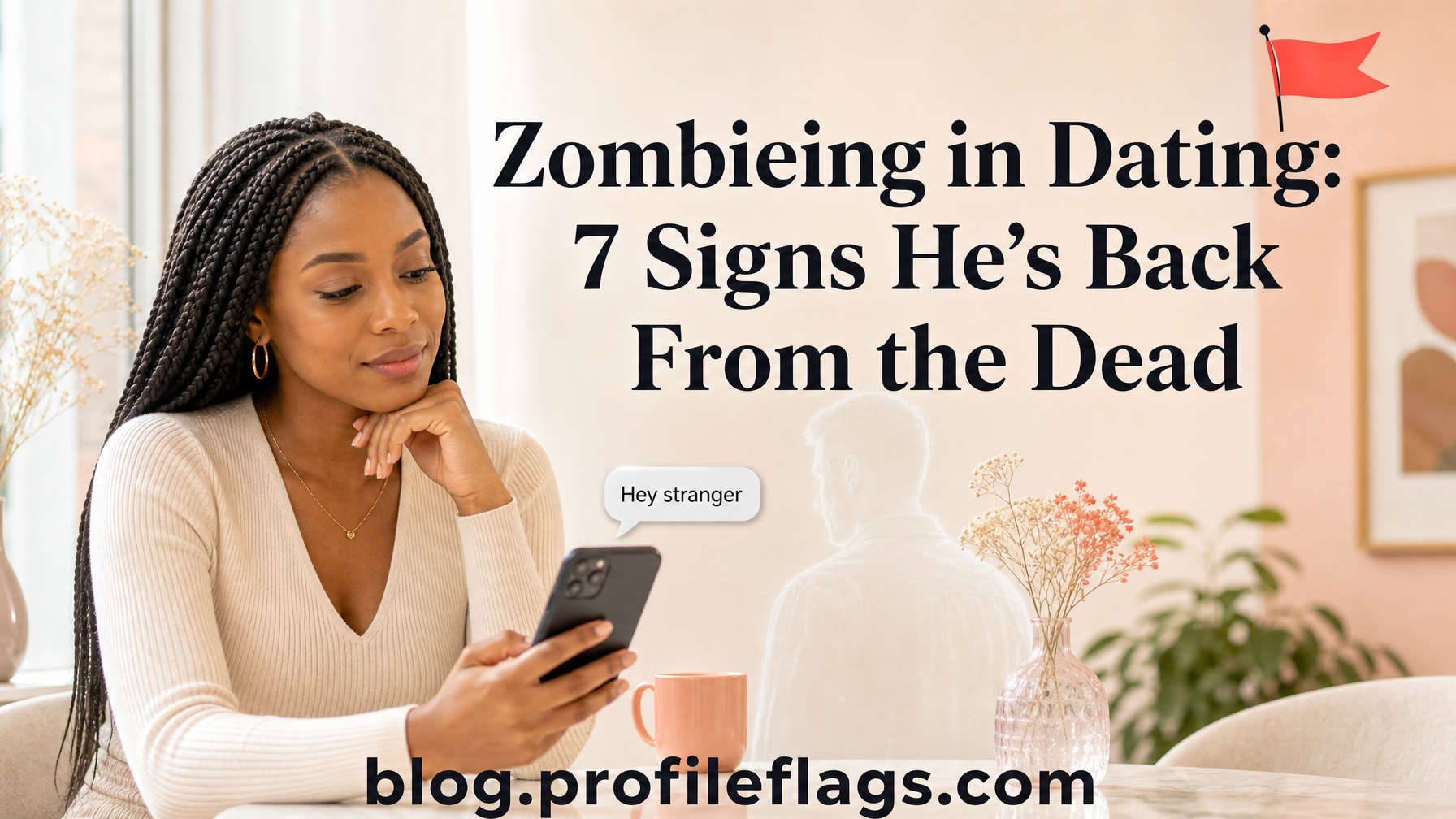
TLDR: Zombieing in dating is when someone who ghosted you suddenly reappears weeks, months, or years later, often with a casual "hey" and zero real apology. TODAY and Bumble's Shan Boodram describe it as the ghoster coming back around. Bruce Y. Lee, M.D., in Psychology Today notes it rarely signals a solid long-term partner. Below: what zombieing is, how it differs from submarining and orbiting, 7 signs, why people do it, and how to respond without handing them your peace.
Table of Contents
- What Is Zombieing in Dating?
- Zombieing vs. Ghosting vs. Submarining
- What the Research and Experts Actually Say
- 7 Signs of Zombieing in Dating
- Why People Zombie You
- What to Do If He's Zombieing You
- The Verdict
You finally stopped refreshing the thread. You told your friends you were done. Your nervous system started to unclench. Then your phone lights up at 11:47 p.m. with a message that sounds like nothing happened: "Hey stranger." Or worse, he likes three of your Instagram stories in a row after months of silence.
That jolt is the point. Zombieing in dating hits after you already did the hard work of accepting the disappearance. The ghost is back, and your brain wants to rewrite the whole story in his favor.
Before you reply on adrenaline, run his profile and messaging pattern through ProfileFlags. A calm scan of red and green flags beats a 2 a.m. reunion text you will regret by breakfast.
What Is Zombieing in Dating?
Zombieing in dating means someone who cut you off without warning or explanation later tries to reconnect, again without a clear account of what happened. TODAY puts it simply: if ghosting is vanishing, zombieing is that same person suddenly coming back around.
Claudia Giolitti-Wright, MA, LMFT, told TODAY the return often looks like a lazy DM ("Hey, how've you been?"), a streak of likes after radio silence, or a soft check-in that skips the hard part. Shan Boodram, Bumble's sex and relationships expert, adds that zombies show up as story likes after ignored texts, "I miss you" messages after weeks of silence, or comments under posts while older messages stay unanswered.
Bruce Y. Lee, M.D. stresses the defining piece: no real explanation on the way out or the way back. The person may act like no time passed. That blankness is what makes the behavior feel so disorienting. You already processed a disappearance. Now you have to process a resurrection with no autopsy report.
The verdict: Zombieing is not a cute coincidence. It is a return after abandonment that skips accountability. Treat the pattern, not the nostalgia.
Zombieing vs. Ghosting vs. Submarining
People mash these terms together. The differences matter when you are deciding whether to answer.
- Ghosting: He cuts contact with no warning and no explanation. You are left holding the unfinished conversation. For the broader pattern of partial exits, see our guide to the soft ghost.
- Zombieing: The ghost returns. Contact resumes, often casually, still without a solid explanation or repair. Lee describes weeks, months, or even years later.
- Submarining: Closely related resurfacing after silence, often framed as "popping up like nothing happened." We break that pattern down in submarining in dating. Some writers treat zombieing and submarining as cousins. The shared red flag is the same: disappearance plus low-effort re-entry.
- Orbiting: He stays visible (views stories, likes posts) without actually talking. That is surveillance energy, not reconnection. Related: orbiting in dating.
- Slow fade: Contact thins out gradually instead of a hard cut. See slow fading in dating.
If the return also comes with crumbs of attention and no plans, you may be dealing with breadcrumbing layered on top of zombieing. If he only resurfaces when his other options cool off, that overlaps with cushioning and cookie jarring.
The verdict: Name the behavior accurately so you stop calling a low-effort reboot "fate."
What the Research and Experts Actually Say
Skip vague "studies show" talk. Here is what is on the record.
Mickey Langlais, Ph.D., CFLE, at Baylor University has studied ghosting's psychological and physiological hit. In findings summarized by Baylor's Robbins College, simulated ghosting left participants more likely to report elevated anxiety and lower self-esteem, with stress responses that included higher heart rate and blood pressure. In follow-up work on people whose past flames resurfaced (what Langlais's team discusses as zombieing), outcomes varied, but reconnections overwhelmingly tended toward eventual breakup, and self-esteem tended to drop when comparing before and after the return.
Lee argues ghosting and zombieing sit opposite the basics of a healthy bond: open communication, trust, and basic respect for your time. He frames many zombie returns as backup-plan behavior. You were not the first choice when he left. You may not be the first choice when he circles back either.
On the emotional load, Shan Boodram told TODAY zombieing can feel more taxing than the original ghosting because of the confusion it restarts. Dating coach Nia Williams, quoted in Cosmopolitan UK, lists confusion, anger, and vulnerability as common reactions, plus hits to security and self-worth. Cosmopolitan also cites Badoo research claiming 43% of self-confessed ghosters regret ghosting and 69% said they would be less likely to ghost if they understood the long-term impact on the other person. Regret on his side still does not equal readiness on yours.
If you want a short checklist of flags people miss while they are still explaining things away, grab the free PDF The 5 Red Flags Most People Miss.
7 Signs of Zombieing in Dating
1. The "hey stranger" text with no context
After a full disappearance, he sends something breezy: "Hey," "You up?," "How've you been?" No ownership of the silence. Giolitti-Wright's examples in the TODAY piece match this exactly. Casual tone is the tell. Serious repair does not open with a meme energy greeting.
2. He likes your stories but never answered your last message
Boodram's description covers this: social engagement after he ignored real attempts to reach him. He wants access to your attention without the work of a conversation. That is not growth. That is a free sample of your life.
3. He acts like no time passed
Lee calls this out: the zombie may behave as if nothing happened. No "I know I went silent." No timeline. No apology that names the harm. If you have to bring up the ghosting yourself just to get basic honesty, he is already showing you the communication style you would live with.
4. The return is timed to his loneliness, not your life
Friday night. Holidays. After a breakup with someone else. Boodram told TODAY people zombie out of boredom, after another interest falls through, or when they are unsure what they want. Giolitti-Wright adds loneliness, validation-seeking, and testing whether you are still interested. Notice the common theme: his needs, not your peace.
5. He wants easy access, not a real conversation
He pushes for a late-night call, a drink "like old times," or a vague hang. He resists any talk about what went wrong. Williams, in Cosmopolitan UK, notes that if you are open to reconnecting at all, you still need clear communication about the past ghosting. If he dodges that, you already have your answer.
6. He offers excuses that do not hold water
"I was so busy." "My phone was crazy." "I needed space" with no end date and no check-in. Lee points out there are few situations where a person could not send some form of heads-up or, at minimum, return with a real apology. Adults who respect you send "I need two weeks offline for a family issue" or they own the mess when they come back. Zombies hand you fog.
7. Your body braces before your brain does
You see his name and your stomach drops, then your hope spikes. That whiplash is part of why Boodram says zombieing can feel worse than the original cut. Langlais's ghosting work, summarized by Baylor, already ties disappearance to anxiety and stress physiology. A sudden return can yank that system back online. If your body goes tight, treat that data as seriously as his text.
The verdict: One soft reappearance might be clumsy. A pattern of silence plus low-effort reboot is information. Believe it.
Why People Zombie You
Motives vary. None of them require you to be available on demand.
Backup plan energy. Lee is blunt: people rarely ghost their top choice. When the preferred option stalls, the ghost becomes a zombie and tests whether you are still reachable.
Avoiding accountability. Boodram told TODAY zombieing is often the easiest way to skip owning the disappearance. A real return requires a hard conversation. A "hey" requires thumbs.
Loneliness, boredom, curiosity. Williams and Giolitti-Wright both name these. Dating apps and social media make reappearing almost frictionless. Low friction creates high nonsense.
Fear of commitment with a side of ego. He wants the option of you without the structure of you. That is not romance. That is inventory management.
None of this means you are unlovable. It means he managed his discomfort by exporting it onto you twice: once when he left, once when he came back for a hit of attention.
If his profile always looked inconsistent, polished in photos and empty in prompts, decode it with ProfileFlags before you invest another weekend decoding him yourself. And if you are tired of app chaos entirely, a custom page at MyDatePage is how some serious singles step off the swipe treadmill on their own terms.
What to Do If He's Zombieing You
Pause before you reply
Do not answer in the first rush of cortisol and nostalgia. Put the phone down. Tell one grounded friend. Ask one question: does he seem interested in making this right, or in getting a reaction? Giolitti-Wright's frame from TODAY is useful here.
Require accountability as the minimum
Boodram's line is sharp: once you see the pattern, disengage unless he takes responsibility for the inconsistency and commits to a different way of connecting. Lee treats a full, honest explanation as a non-negotiable prerequisite for any further contact. No explanation, no access.
Use a clear script if you respond at all
You do not owe a novel. Try:
"You disappeared without explanation. If you want any kind of conversation, start with what happened and why you think silence was acceptable. I'm not available for casual check-ins that skip that."
Or, if you are closed:
"I'm not interested in reconnecting. Please don't contact me again."
Then match your behavior to your words. Blocking is allowed. So is leaving him on read.
Watch what he does after the words
Apology without changed behavior is theater. If he explains, then goes quiet again when things get real, you are not in a reunion. You are in a sequel. Langlais's team, per Baylor, found zombieing reconnections often end in breakup anyway. Do not build a future on a sample size of one charming night.
Protect the progress you already made
You already survived the ghost. That counts. Letting a zombie rewrite your standards is how you pay twice for the same lesson. If mixed signals were always the vibe, revisit mixed signals in dating and decide whether you still want that job.
The verdict: You control the door. Accountability is the key. No key, no entry.
The Verdict
Zombieing in dating is the ghost who will not stay gone. It often arrives without apology, timed to his boredom or loneliness, dressed up as fate. Experts from TODAY, Psychology Today, and Baylor's Langlais research point the same direction: the pattern stresses your system, confuses your self-trust, and rarely predicts a steady bond.
You are allowed to want someone who never makes you wonder if they are alive. You are allowed to keep the peace you rebuilt after he left the first time.
Before you answer the next "hey stranger," decode the pattern with ProfileFlags (one-time $19.99, unlimited scans). Grab the free guide The 5 Red Flags Most People Miss if you want a pocket checklist. And if you are ready to attract people who show up without vanishing acts, build a presence that is yours at MyDatePage.date.
Disclaimer: This article is for educational purposes and is not therapy, legal, or medical advice. Patterns described draw on publicly reported expert commentary and research summaries, including clinical and academic sources linked above. Your situation is specific. If you feel unsafe or distressed, contact local support resources.